



There is a mathematics that cannot be taught in any classroom. A precise arithmetic of the soul, the body, the past, and the future. One I have witnessed unfold countless times in the fireside shadows of our homesteads, in the subtle gestures of old women in rural villages, and in the haunting, rhythmic chants of initiates dancing their
way into another realm. I call it Spiritual Mathematics. That inexplicable but irrefutable logic that governs the African spiritual world.
For as long as I can remember, I have lived alongside Sangomas. I have seen them called upon in times of birth, death, sickness, and turmoil. Even those who decry them publicly. Christians, atheists, and modernists alike still find themselves whispering their names in the dead of night when affliction strikes, when dreams won’t let them sleep, or when something ancient inside them is stirred.
Yet, despite the omnipresence of Sangomas in our society, their work and wisdom are often shelved as “witchcraft” by the misinformed, the colonially conditioned, and the fervently converted. It is ironic perhaps, tragically so, that in South Africa, where ancestral veneration is so deeply rooted in every culture and community, we still fear and vilify our own.

The Geometry of Spirit
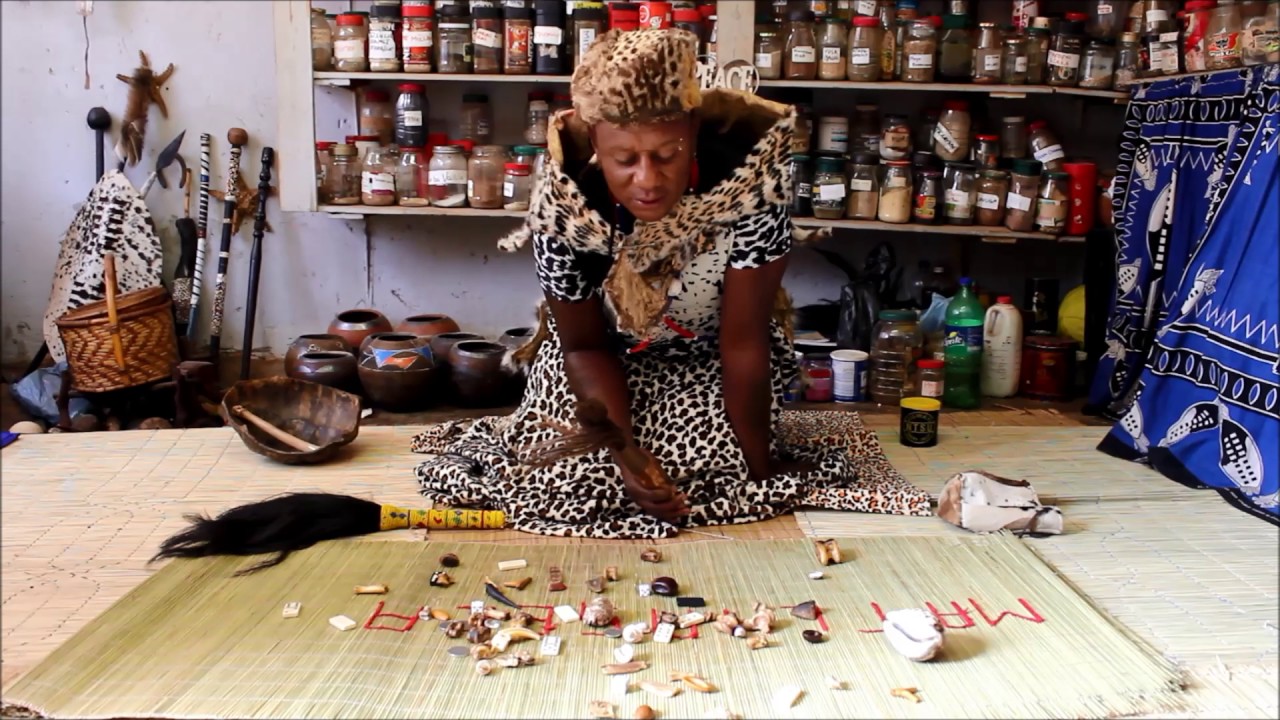
When I speak of Spiritual Mathematics, I speak of the architecture of the unseen. The Sangoma, like a seasoned engineer, reads patterns in illness, sees spiritual imbalance in family structures, detects intergenerational trauma with an almost forensic intuition. Through bones, dreams, rituals, and song, they recalibrate the human being and the spiritual ecosystem they exist in.
The precision of their diagnosis, whether through bone throwing (amathambo, ditaola), dream interpretation, or spiritual visions, is something to behold. I have seen Sangomas describe events, afflictions, and personal histories they could not possibly have known unless there was an intelligence far greater at play. Not guesswork. Not coincidence. Something else. Something rigorous. Measured. Mathematical.
One is tempted to ask: how do they know?

In our world of science and scepticism, we demand repeatability, objectivity, and peer review. Yet, here is a domain that operates on frequency, vibration, ancestral alignment, and a spiritual code that predates Western epistemology by millennia. A Sangoma may not wear a lab coat or have letters behind their name, but many of
them have healed conditions that modern hospitals could only describe as mystery ailments.
The Ritual Economy of the Soul
Africans are ritualistic by nature. Ritual is the language with which we speak to the invisible. From the first cries of birth to the last breath of death, our journey is punctuated by ceremonies, offerings, songs, and blood. Whether it is the imbeleko to introduce a child to the ancestors, the ulwaluko to mark manhood, or the final
ukungcwaba when we return the body to the earth. It is all part of a sacred sequence. A formula. A cosmic syllabus.
And almost always, a Sangoma is consulted. It could be the family matriarch with the gift. Or a respected Gobela who has trained hundreds. It could even be a reclusive village healer whose name is only spoken in whispers. But someone, somewhere, will know who to go to when the mathematics of the spirit needs solving.
This is not superstition. This is not the dark arts. This is a heritage of calculation, just not the kind we were taught to value.

The Crisis of Misunderstanding
Colonialism did more than dispossess us of land, it uprooted our cosmologies. It painted our prophets as witches, our temples as huts, and our rituals as primitive savagery. The Church, for all its good, came armed with holy water and doctrine, determined to drown our drumbeats and incense smoke in scripture.
And so, many of us became ashamed of our own ways. We distanced ourselves from the very sources of wisdom that had sustained our people for centuries.
We allowed missionaries and textbooks to tell us that bones were demonic, that dreams were meaningless, that ancestors were false gods.
Yet, in private, in crisis, and in longing we returned. Quietly. Shamefully. Desperately.
Even today, it is estimated that over 80% of South Africans, regardless of race or religion, consult sangomas. Some openly, most secretly. Politicians. Academics. Celebrities. CEOs. Nurses. Lawyers. The unemployed. The afflicted. All find themselves in the waiting room of a Sangoma’s practice, hoping to decode the things that medicine, therapy, and religion cannot answer.

The Dangerous New Trend: Initiation as Fashion
Lately, however, there has emerged a troubling trend, initiation as fashion. A handful of celebrities and influencers have declared their journeys into sangoma training (ukuthwasa), not out of spiritual calling, but for relevance and branding. Some post their beads and red cloths for likes and views. Some force themselves into initiation as if it were a retreat or spiritual badge of honour.
But this is sacred terrain. One does not choose to be a sangoma; one is chosen. And if you enter this world uninvited, the consequences can be spiritually catastrophic. There are spiritual debts to be paid, ancestral contracts to uphold, and a community of spirits to honour. This is not a performance. This is service. This is burden. This is war and healing at once.
Those who are truly called often suffer years of mental, emotional, and physical torment before they answer the call. It is not glamorous. It is not easy. But for those who heed it, there is a power and peace unmatched.

Good Healers and Dangerous Pretenders
Of course, not all sangomas are righteous. Like in any field, medicine, politics, law, there are charlatans. Some exploit the vulnerable. Some promise miracles for a fee. Some masquerade as healers but are in fact harmers. These are not spiritual mathematicians, they are scammers.
But to paint the entire system with the same brush is both unfair and dangerous. We must develop a discerning eye, not a dismissive one. Not every healer is holy, but neither is every prophet false.

Spiritual Mathematics in the Modern World
How do we, in this modern world of data, AI, and quantum physics, find room for Spiritual Mathematics? Perhaps the question should be: how do we not?
In an age where Western science is only now confirming the intelligence of plants, the power of intention, and the possibility of epigenetic trauma. African spiritual systems stand as ancient technologies waiting to be reclaimed and refined.
We must stop whispering our belief systems. We must re-theorize and re-intellectualize our spiritual technologies, not only as cultural practices but as legitimate modes of knowledge. We must write about them, study them, codify them without corrupting them. Most importantly, we must live them.

There is a sangoma in every village who has been solving equations of the soul longer than many therapists have been practicing. There are grandmothers who diagnose with dreams. Uncles who predict deaths with dreams. Children who walk between worlds.
It is time we honoured them, not as relics of the past, but as vital forces for our future.

Back to the Sacred Board
Spiritual Mathematics is not a metaphor. It is a literal system of spiritual logic, complex, beautiful, accurate. It is neither inferior to Western medicine nor in competition with it. It is another way of knowing. Another way of healing. Another way of remembering who we are.
As we continue to reclaim our heritage, may we also reclaim our sangomas. Not only as healers, but as custodians of a science that was always ours.
And may we, the living, learn to calculate once again in the sacred language of our spirits.
Before one throws bones, before one wears beads or ties the red cloth of the initiated, there is the calling. And it never begins in peace. The calling, ubizo in isiZulu, does not arrive with fanfare or clarity. It arrives as illness, misfortune, mental breakdowns, or persistent dreams that pull at one’s spirit. It arrives as an unshakable restlessness, a sensation of being watched or followed, or the eerie feeling of existing between two worlds. Some experience it as recurring visions, others as voices that speak through them unbidden, in languages they do not know.

Often, those being called are misdiagnosed, by doctors, psychologists, even religious leaders. They are told they are depressed. Possessed. Mentally unstable. But in African metaphysics, this is often the first stage of spiritual awakening. It is the ancestors knocking at the door of your life, demanding recognition, demanding
service.
I have seen this firsthand: young professionals suddenly unable to concentrate, hearing drums in their dreams, inexplicably drawn to fire and rivers. Elders waking up speaking languages they never learned. Children who know the names of people who died long before they were born. These are not myths. These are case studies
in Spiritual Mathematics.

But no one chooses to become a Sangoma. It chooses you. And resisting it can be dangerous.
There are countless accounts of people who tried to run from the calling, only to experience years of turmoil until they surrendered. Once they do, the path of ukuthwasa (initiation) begins, led by a seasoned sangoma called a gobela, who trains the initiate through ritual, discipline, song, dance, sacrifice, and ancestral communion. This training is not symbolic, it is transformational. You emerge not as a performer of rituals, but as a vessel of healing.
Ukuthwasa is, in many ways, the most advanced form of university our ancestors devised. You learn the language of bones. You learn to listen to silence. You learn to read not only bodies, but lineages. You become a spiritual mathematician.
And once that calling is accepted, the life you knew before is no more. You live in service of the spirit. You heal the living, speak to the dead, and balance equations most people cannot see.


