






It was an afternoon steeped in history, reflection, and the kind of deep camaraderie that only those who have walked the long, unrelenting road of struggle can understand. Today, I spent time with what is referred to as A Circle of Friends. A gathering of stalwarts of the Black Consciousness Movement. These are the men and women who, through their unwavering commitment and intellectual fortitude, laid the foundation for a movement that reshaped South Africa’s political and social landscape.
At the heart of this gathering was Fanyana Mazibuko, a revered teacher whose influence stretched far beyond the classroom. His tenure at Morris Isaacson High School in Soweto was marked by an intentional, almost prophetic shaping of young minds, minds that would go on to lead and define the struggle. His students read like a roll call of history: Tsietsi Mashinini, Magauta Molefe, Murphy Morobe, Oupa Ngwenya and many more who would go on to challenge the injustices of apartheid with fierce intellect and unbreakable will.

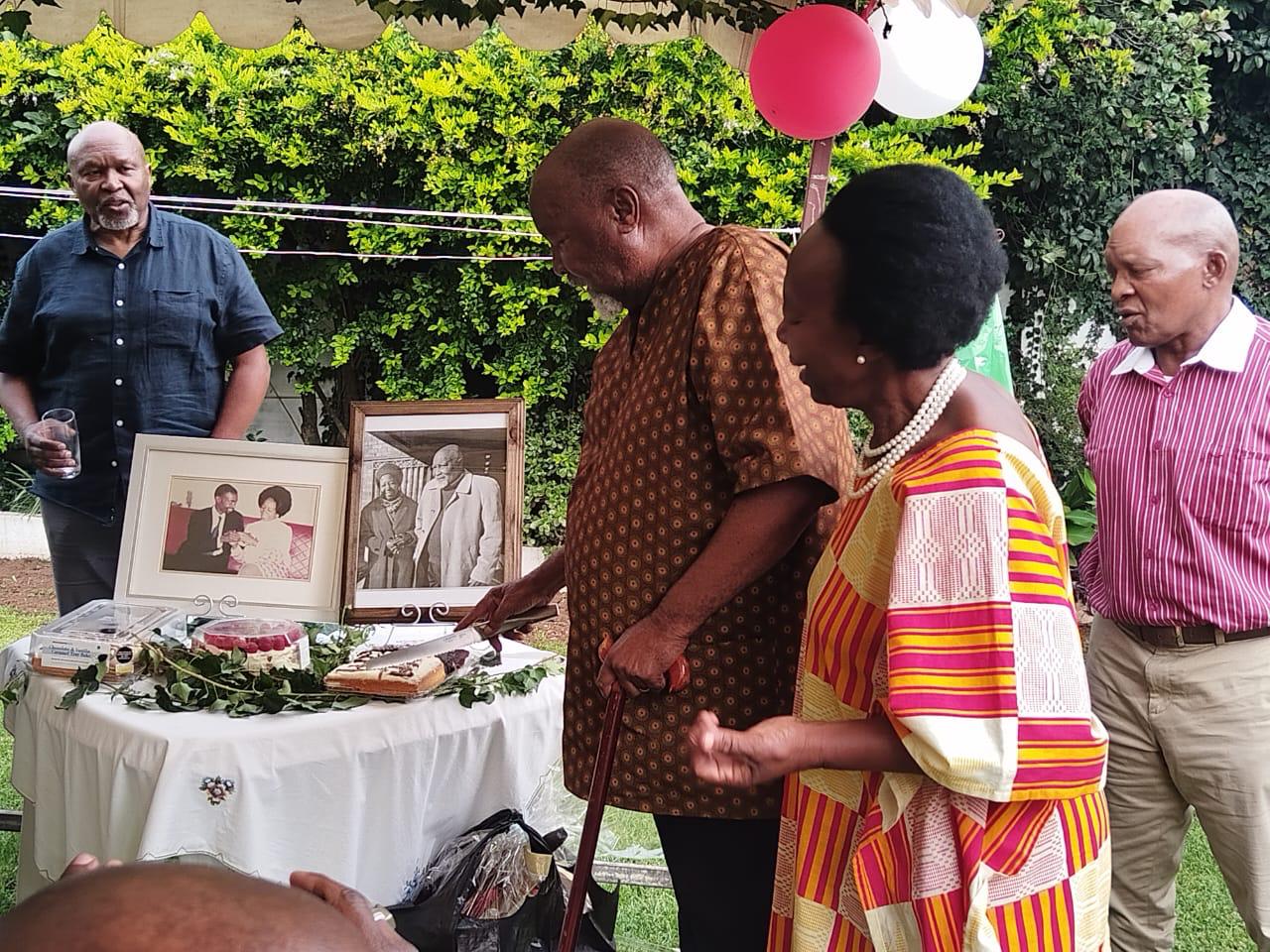
As we gathered with his family, his beloved wife of six decades, Mirriam, his three children, and his grandchildren, the occasion was not just a celebration of his 83rd birthday but a reaffirmation of the indelible impact he has had on generations. The presence of his former students, comrades, and fellow intellectuals added to the weight of the moment.
Then, unexpectedly, Fanyana threw a curveball, a revelation that sent a jolt through me: he had been my father’s student at St. Matthews High School. My father, Drake Koka, as I am told, was one of the founding voices of the Black Consciousness Movement alongside Steve Biko, Mamphela Ramphele, and Sath Cooper, who was also present to pay tribute. Constantly nodding his head in affirmation and agreement. For once, he said very little. This realization deepened my appreciation for the interwoven legacies that have shaped my journey. What had begun as a gathering of minds and memories had, in an instant, become profoundly personal.

Fanyana Mazibuko was not just my father’s student. Along with his peers, Saths Cooper, Barney Pityana, later became my mentors, guideposts in my own intellectual and academic pursuits. This is not in exclusion of many on this platform who had a hand not only in my growth, but in the shaping of many others.
In a world that often sought to derail young black men from the pursuit of knowledge and self-determination, they played an unwavering role in ensuring that I remained on course. He, in particular, challenged me, protected me, and nurtured my mind in the very tradition of Black Consciousness. Encouraging rigorous thought, self-definition, and an unyielding commitment to community.

But perhaps the most touching moment of the day was his tribute to his wife, Mirriam.
.2e spoke of her as his pillar, the quiet force behind his work, his greatest support through the decades of struggle, triumph, and sacrifice. Even now, as age weaves its inevitable course through their lives, she continues to dedicate herself to community work in Soweto, embodying the very ethos of service that has defined their journey together.
This afternoon, as the conversations ebbed and flowed between the past and present, I felt the weight of history settling around us. Not as a burden, but as a testament. These were not just stories. These were lived experiences, sacrifices, victories, and lessons that demand to be preserved and passed down.

It was more than a gathering. It was a reaffirmation of legacy, of continuity, and of the unbreakable bonds that tie us to those who came before us. It is a chapter I will carry forward, a story I will tell, ensuring that the wisdom of these giants continues to inspire the generations yet to come.
As I sat there, absorbing it all, I felt the weight of history pressing against my chest. The realization settled in. Fanyana Mazibuko is yet to be fully honored, yet to be given his due. But in his garden, on this day, among the people who had lived and breathed his teachings, his honor was absolute.


